
Skip to Main Content

Need help understanding your rights as an LGBTQ+ person or someone living with HIV? Visit our virtual Help Desk.

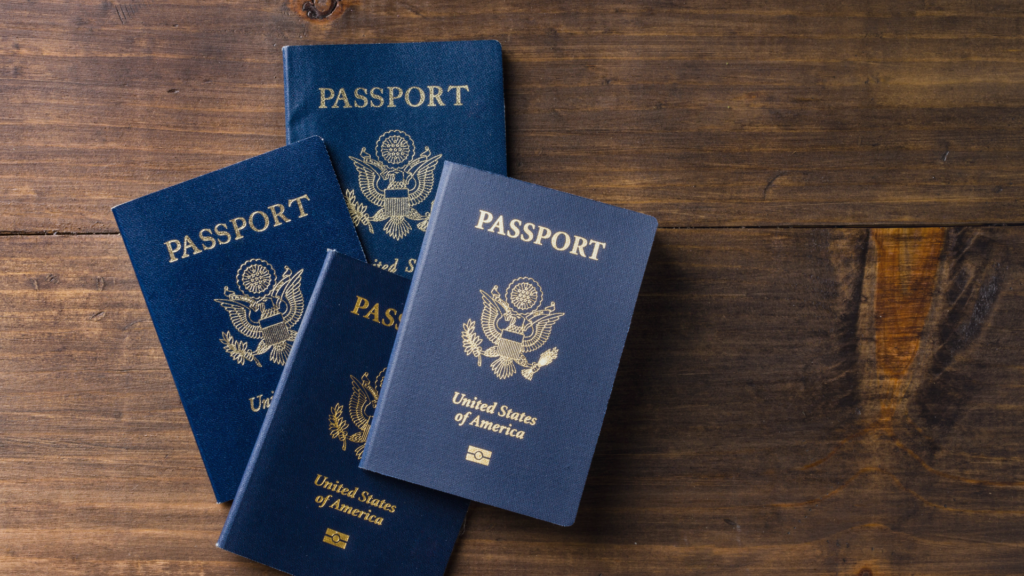
four United States passports laying on a wooden surface

Identity Document Guidance for the Transgender Community

What You Need to Know


Transgender, gender-nonconforming, nonbinary, and intersex (TGNCNBI) people may have questions about how recent federal actions, including the January 2025 “Gender Order,” affect their passports, REAL IDs, and other identity documents. This resource aims to provide information about what has happened, and what these actions mean for travelers.

Latest Updates

Frequently Asked Questions

Resources and Support

It’s understandable if you feel scared, angry, or overwhelmed after the “Gender Order” and related federal actions. These policies are designed to create uncertainty and barriers in daily life—but they do not erase anyone’s existence, worth, or contributions. While these actions may cause disruption, TGNCNBI people still have fundamental rights and human dignity.

There is no one-size-fits-all answer about how to respond. The best course of action will depend on your personal circumstances — including how you use your passport, your plans for international travel, and your individual safety needs and risk tolerance.

IMPORTANT: This page is for informational purposes only, and it is not legal advice. For personalized support, consult a licensed attorney in your state.

This page was last updated March 16, 2026.


LATEST UPDATE: Restrictive Passport Policy is in Effect—But Situation Still in Flux

November 20, 2025

We are aware of additional language that has appeared on the State Department website. We have not gotten any credible reports of the government invalidating anyone’s passport.  We will continue to update this page with new and verified information.


Previous updates

November 6, 2025

The U.S. Supreme Court has issued a decision that means that new passports issued by the State Department will show a person’s sex assigned at birth, rather than their gender identity. There will not be a choice of an “X” gender marker. This applies to new passport applications, renewals, and replacements for lost or damaged passports. This may cause delays with pending passport applications.

Passports with accurate “M,” “F,” or “X” gender markers remain valid until they expire, but new, renewed, or replacement passports will follow this more restrictive policy unless the courts later rule a different way.

With this decision, the Supreme Court granted the federal government’s request to stay (pause) the lower court’s injunction in Orr v. Trump. This is why the restrictive passport policy is now back in effect.

Frequently Asked Questions

  • U.S. Passports and Consular Reports of Birth Abroad (CRBA)

    The January 2025 Gender Order told federal agencies to strictly define sex in federal documents and to eliminate the “X” gender marker option. Shortly after that, the Secretary of State instructed the State Department to stop processing gender marker changes and to remove the “X” gender marker option from U.S. passports and CRBAs.

    Under this policy:

    • No new passports with “X” gender markers are issued.
    • Gender marker changes to reflect a person’s gender identity are not allowed.
    • Renewals, or reissuance (to replace a lost or damaged passport) of passports will show the person’s sex assigned at birth, even if the person had a gender marker that reflected their gender identity before.

    Previously issued passports 

    U.S. passports and CRBAs with gender markers reflecting the holder’s gender identity— including those with an “X” marker — remain valid until they expire or are replaced.

  • Starting October 14, 2025, CBP’s APIS system requires airlines to choose M or F for the gender field on international itineraries. Because of that, a traveler might only see M or F options when buying a plane ticket.

    Lambda Legal continues to monitor traveler experiences, and we are not aware of any confirmed cases where the government confiscated, or took away, valid “X” marker passports, or where the government would not let someone re-enter the U.S. because of this policy. But if the gender you select when booking does not match your documents, this may cause delays or extra questions.

    Again, at this point, there is no reason to believe that the government will stop individuals with valid, unexpired documents from traveling inside the United States. Travelers with up-to-date documents — including those issued before the new policy — should still be able to use them.

    If you do have problems while traveling, you can reach out to Lambda Legal’s Help Desk for additional information and support.

  • Even though the government has put restrictions on what gender markers a traveler can use, a court-ordered name change reflecting a person’s authentic self is still allowed on federal documents.

    People can change their name on a passport by submitting a certified court order and completing the proper application (DS-82 for renewals or DS-5504 for changes within a year). However, if the State Department can apply the 2025 policy as legal challenges unfold, renewals or reissuance will trigger the current restrictive policies, meaning that if you request a name change, that might mean the State Department will change the sex marker on your passport to match your sex assigned at birth.

    Social security records can also be updated with a legal name change.

    But the Social Security Administration (SSA) no longer permits updates to gender markers, and the State Department may cross-check records with SSA. Having names that don’t match up across documents can lead to issues with employment verification (Form I-9), license renewals, or background checks. Bringing certified copies of name change documents might help avoid complications when traveling.

  • Transgender, intersex, and nonbinary people who apply for a passport for their child should consider using the child’s birth certificate as the proof of citizenship rather than submitting the parent’s own passport.

    This helps avoid triggering review of a TGNCNBI individual’s own passport or passport record.

  • On January 20, 2025, the Trump administration issued a discriminatory Executive Order (“the Gender Order”) aimed at restricting sex and gender recognition in federal records.

    Two federal lawsuits are actively challenging this policy. Click the links below to learn more.

  • The Trump Administration’s early 2025 passport policy change was the first in modern U.S. history to deny TGNCNBI people access to accurate federal identity documents. For decades, people could update gender markers on passports — including selecting “X” as a gender marker starting in 2022. Policy changes during the second Trump administration have meant people are issued documents that misrepresent their identities, force them to give  private information about their sex assigned at birth, and raise the risk that travelers will be harassed or discriminated against.

    The cases in court focus on the real harms inaccurate documents cause. The goal of the cases is to restore access to accurate and affirming federal IDs. The cases, and the people at the center of them, highlight the lived experiences of people who were denied accurate passports for no reason other than that they are TGNCNBI.

    Although the filed cases take different legal approaches, they are part of an important effort to stop the enforcement of this discriminatory policy. Together, they represent a strong legal response to the federal government’s attempt to erase transgender, nonbinary, and intersex people.

    Success in these cases would reinforce that everyone has the right to live authentically—and that government cannot use unscientific and absurd definitions of sex and gender on U.S. Citizens.

    As the legal landscape changes, we will update our website and other resources with the latest information whenever we can.

  • Starting May 2025, the United States requires REAL ID for air travel inside the country. REAL IDs are state-issued driver’s licenses or identification cards that meet certain federal security rules and have a star at the top.

    • Travelers need a REAL ID to board domestic flights and get to certain federal facilities. If the traveler doesn’t have a REAL ID, they will need to present a valid U.S. passport or other federally approved ID.
    • State laws — not federal — control how gender markers appear on REAL IDs. Many states offer X gender markers or allow people to update their gender markers if they have appropriate documentation.
    • Use a REAL ID that aligns with your gender identity if available in your state.
    • Avoid using a passport as your primary domestic travel ID if it contains a gender marker that may expose you to scrutiny.
    • Check your state’s documentation requirements for gender marker changes.
    • Think about using alternative forms of ID such as a passport card or enhanced driver’s license.
    • Confirm that your ID meets REAL ID standardsby looking for the star symbol and checking TSA rules.


Where can I find more resources and help?


Get state-specific information

It is important to consider where you live and to get legal advice specific to your situation before starting gender marker and/or name changes.

States have different processes for obtaining a legal name change and for updating gender markers on state identity documents such as birth certificates, driver’s licenses, or state ID cards.

You can start by reviewing the detailed information about federal and state identity documents offered by Advocates for Trans Equality, The Movement Advancement Project, and Trans Lifeline.


Find legal assistance

  • Contact your state’s LGBTQ+ Equality Group for connections to attorneys in your city or state.
  • Look to the website of the State Bar Association in your state which often has an “LGBTQ” or “Civil Rights” interest group which can connect you to lawyers in your state. The National LGBTQ+ Bar also might be able to provide contact information for LGBTQ+-friendly lawyers in your area or a local bar association that provides attorney referrals.
  • Talk to Lambda Legal’s Help Desk for additional information about your situation. The Help Desk does not give legal advice but usually has helpful information, can assist you to understand information you find online, and might have contact information for lawyers in your area with expertise relevant to your needs.

Crisis help

Lambda Legal’s Help Desk cannot assist with emergencies or immediate requests for legal assistance. Please contact a crisis hotline or any legal service provider that is equipped to provide emergency assistance.

Here is contact information for several of our partner organizations. Keep in mind these lines are not branches of Lambda Legal and are instead resources for crisis intervention.