
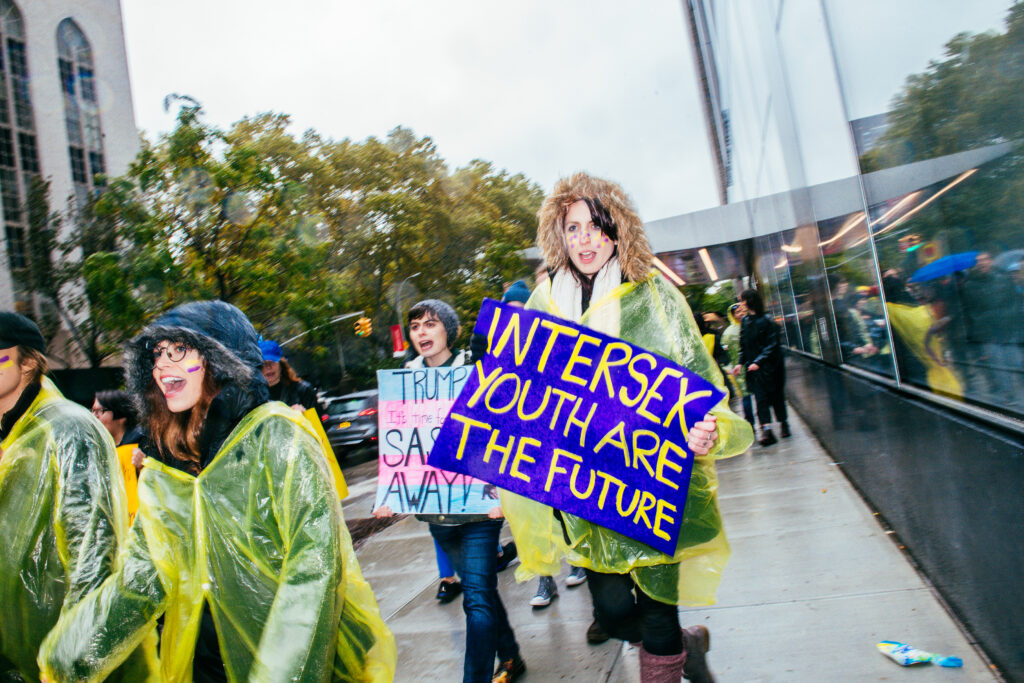
Five advocates reflect on their experiences, the challenges facing their community, and how we can turn solidarity into action.
Our bodies are our own. And we deserve the freedom to make decisions about them, our health, and our futures. Yet intersex people have long faced nonconsensual medical interventions such as intersex genital mutilation, pressures to conform to social expectations of sex and gender, and laws that fail to recognize or protect their self-determination and access to bodily autonomy.
Lambda Legal has fought for the rights and dignity of the intersex community for decades. In 2006, the organization known today as interACT: Advocates for Intersex Youth began as a project sponsored by Lambda Legal, with our attorneys supporting founder Anne Tamar-Mattis in developing legal strategies to protect intersex people. It later became an independent nonprofit in 2010.
Lambda Legal continued this work through cases such as Zzyym v. Blinkin, representing intersex and nonbinary U.S. Navy veteran Dana Zzyym in their fight for an accurate passport. In 2021, Zzyym became the first person to receive an “X” gender marker on their passport.
Today, intersex and transgender people face many of the same cruel efforts to restrict their autonomy, erase their identities, and dictate what they can do with their own bodies. But we can’t win the battle for bodily autonomy alone. It’s only in working together, on Intersex Day of Solidarity and throughout the year, that we can build the collective power needed to secure that freedom for everyone.
Young intersex advocates are helping lead the charge toward a future where that’s possible. We interviewed five of them about what bodily autonomy means to them, what it will take to advance intersex rights, and how each of us can show up and take action.
What does bodily autonomy mean to you?
Dakota, 21, she/her: As an intersex woman, bodily autonomy is deeply personal to me. My life has taught me that the categories people create to understand the world do not always reflect the people living in it. Bodily autonomy means that our humanity comes before the categories imposed upon us. It means that we should not have to prove that our bodies are worthy of dignity, that our medical needs are legitimate, or that our lives fit neatly into someone else’s understanding of sex.
Ly, 25, it/its: For many, autonomy over our bodies requires presentations, academic citations and begging on hands and knees to be heard. Bodily autonomy for intersex people means that “intersex” is just a happenstance of our bodies, not a characteristic we need to defend with sword and shield.
Lauren, late 20s, she/her: True bodily autonomy also encompasses the ability of an individual to express their authentic self, including defining their social reality: the names and pronouns they use, the clothes they wear, and their interests.
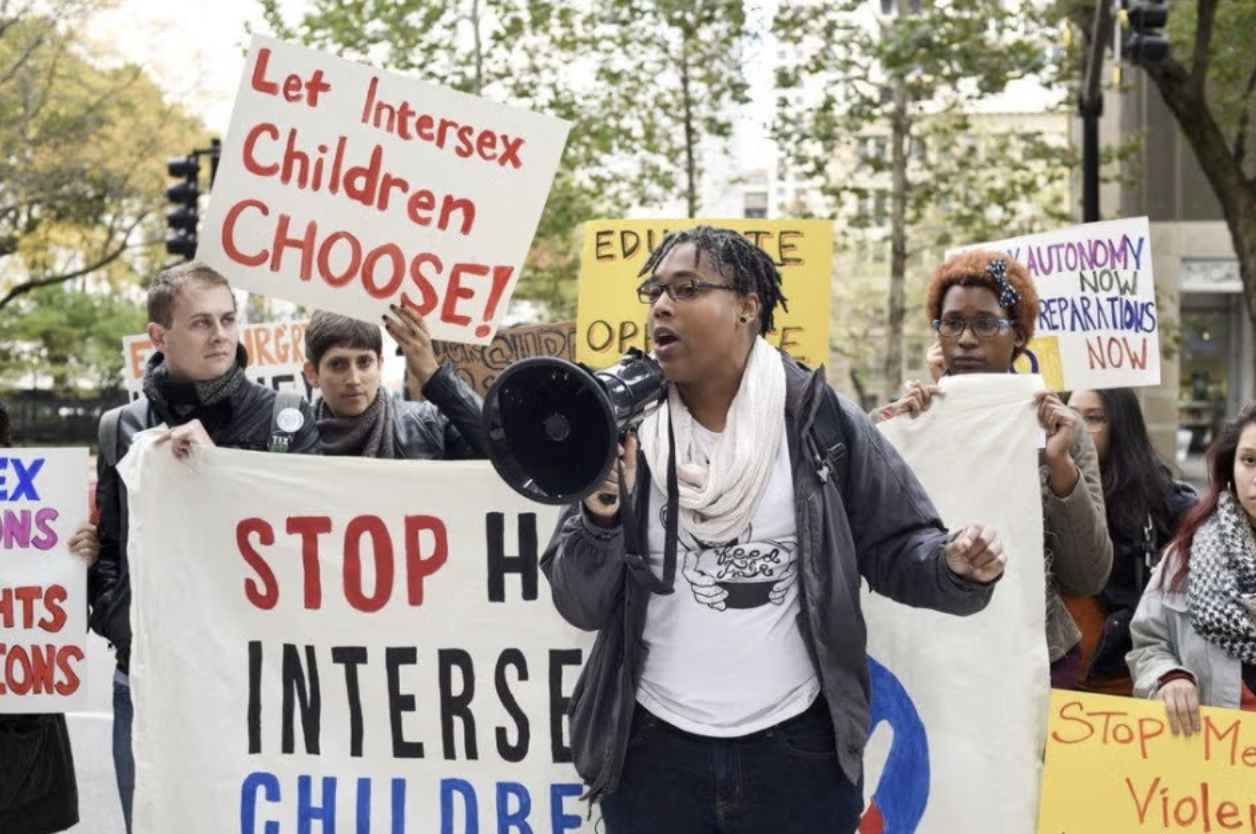
What does bodily autonomy mean outside of medical decisions — such as your identity and self-expression?
Ly: The same way that intersex variations are proof that biological sex is a spectrum and doesn’t have clear and defined boundaries, intersex people are all over the world and we all deserve the human right of travel and migration safely. Bodily autonomy means freedom from borders. Bodily autonomy means decriminalized sex work and the ability to make weird art.
Dakota: Bodily autonomy extends far beyond the doctor’s office. It includes the freedom to express yourself, to understand your identity on your own terms, and to live without constantly being asked to defend who you are. For me, that also means recognizing that being intersex and being a woman are not mutually exclusive. My intersex variation is part of my biological reality; my womanhood is part of my lived reality. Neither cancels out the other.
Where do you see intersex leaders or allies making a difference for intersex rights today?
Myrtle, 26, they/them: I see the leaders of the intersex movement working together with lawmakers to advocate for generalized healthcare access for intersex people & the medical coverage of treatment for all intersex conditions, including PMOS (polyendocrine metabolic ovarian syndrome).
Ly: I think that intersex art is deeply undervalued, and the most important intersex work to me is the work where intersex people feel like they have a place in the world. I am so grateful for Mariah Ayscue’s poetry, for Sorensen Nahima and Nessa Calvin’s intersex art collaborations, for Pidgeon’s book and photography, and for Hans and Saifa’s timeline. I’m grateful for the book Transactional Intercourse and all those authors. I think where allies are getting it correct is actually bringing us up.
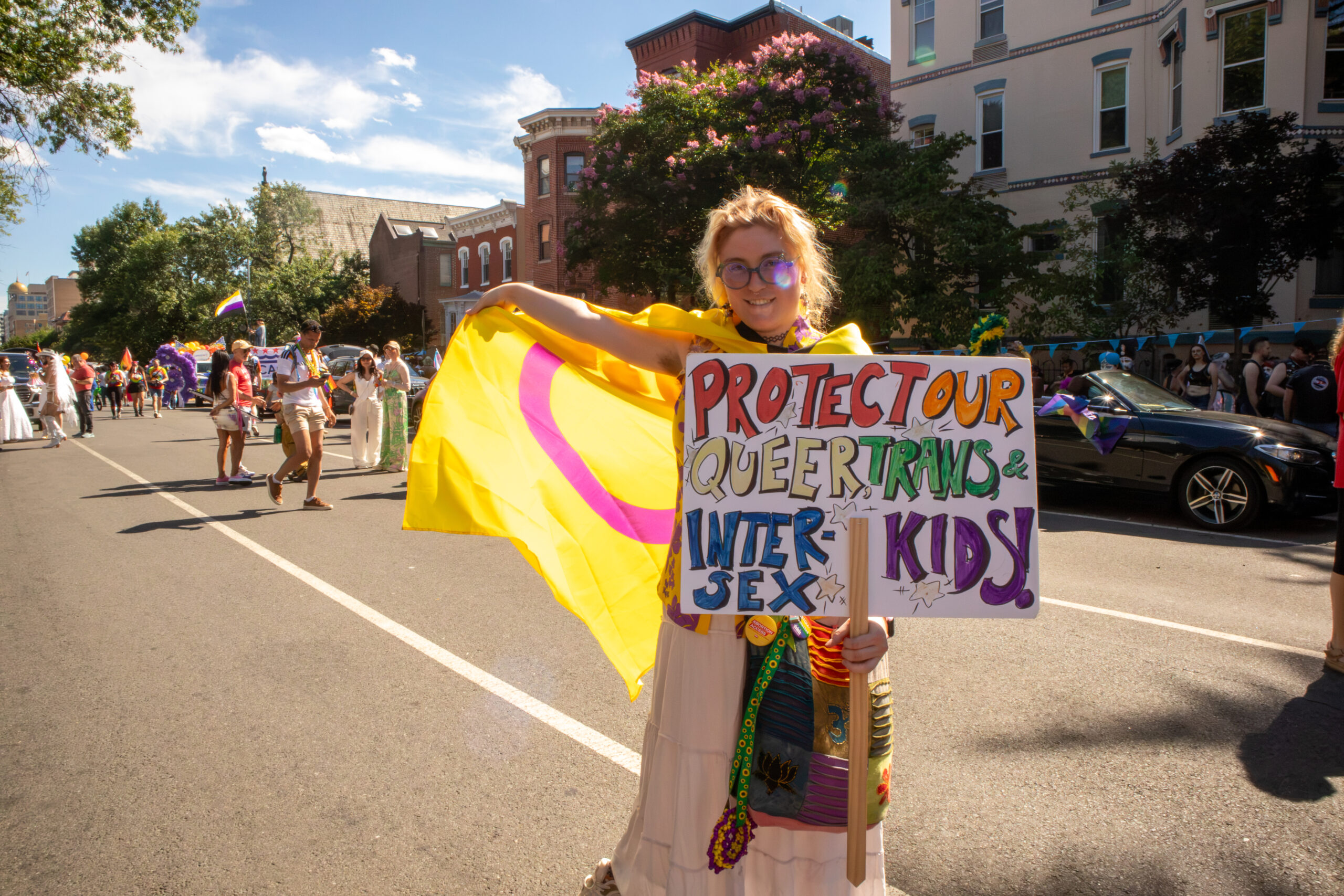
Dakota: Organizations such as InterACT and advocates working alongside civil rights organizations like Lambda Legal are helping bring intersex experiences into conversations about bodily autonomy, equality, and the law. That work matters because intersex people have too often been discussed as medical cases or abstract legal questions rather than as people with their own voices, experiences, and aspirations.
Why is it important for intersex people to have a meaningful say in decisions about their own bodies?
Ly: I am always astounded by the deep well of knowledge intersex people hold about our variations and bodies that perisex (note: perisex means not-intersex) people just truly cannot grasp. I have often been the person to educate my own doctors with studies and reports given to me by other intersex people. Intersex people, like all people, know their bodies best.
Dakota: Because we are the people who have to live with the consequences. Too often, the goal has been to make our bodies conform to expectations rather than to respect our autonomy, individual circumstances, and long-term well-being. This is why informed consent, access to accurate medical information, and meaningful participation in medical decisions are so important.
What can allies do to support?
Myrtle: Allies can help by staying curious; ask us questions, be engaged & actually listen to our experiences. You may never understand, but you don’t need to; just accept us as we are.
Anonymous, under 18, no pronouns: Allies can support intersex folks by learning about us more and that we’re actually not as “rare.”
Dakota: Supporting intersex people means understanding that our needs are not always identical to those of other LGBTQ+ communities. There is meaningful overlap in our struggles for dignity, equality, and freedom from discrimination, but intersex people also face distinct issues involving medical decision-making, bodily integrity, access to information about our own biology, and legal recognition.
How can the rest of the LGBTQ+ community act in solidarity with intersex people?
Ly: Do not only use us for debates without knowing who we are. Understand our unique experiences and our differences and relations to your experiences. Stand with us when we fight for forms of liberation that might feel wholly separate and foreign from you, because I promise our liberation is still entwined.
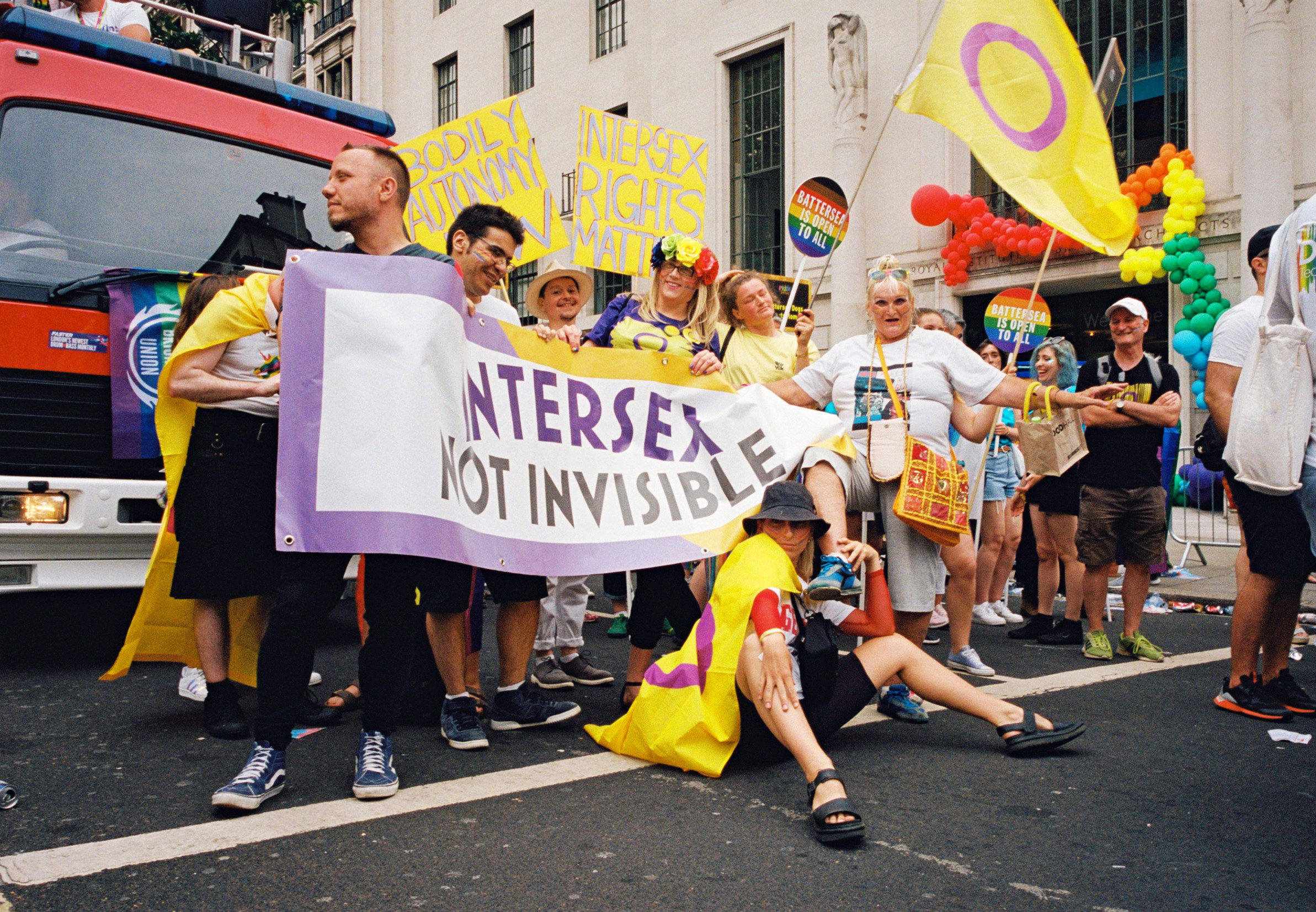
Dakota: Intersex and transgender people are not interchangeable, and our experiences should not be collapsed into a single narrative. At the same time, we have meaningful opportunities to stand together against discrimination, government overreach, and policies that deny people dignity because their bodies or lives do not conform to rigid expectations. Our movements are stronger when we recognize both our shared interests and our differences.
What do you wish law and policymakers knew about intersex people?
Myrtle: I wish law and policy makers knew how many more of us exist without even knowing it, and how many people go undiagnosed or have their diagnosis hidden due to stigma.
Ly: That we aren’t just a single “third sex.” Intersex people should be able to just exist as people. Intersex people are an often unseen casualty of anti-trans rhetoric.
Anonymous: I wish they viewed us as real people, not just grouped with the LGBT community. Some of our needs are the same, but when it comes to medical manipulation and social intersexism, that’s where it differs. They need to make laws based off our specific needs and they need to know our experiences.
Lauren: I hope that in sharing my experience, lawmakers and allies can better understand our often overlooked plights. The suffering that many intersex individuals must face due to the scarlet letter we’re branded with for the sin of being born is often immense.
What are your hopes for the future — your own or the future of intersex rights?
Myrtle: I hope that all intersex people get the health care they need — and I hope to someday raise enough money for my own procedure.
Anonymous: I hope that IGM (intersex genital mutilation) and forced HRT (hormone replacement therapy) get eradicated.
Dakota: I want a future in which intersex people do not have to become advocates simply to be heard. A future in which a person can seek medical care without having to educate every professional they encounter about their existence. A future in which policymakers understand that sex characteristics are more complex than the categories we have historically used to describe them — and that the complexity of human biology is not a justification for denying anyone equal protection.
Learn more about the issues facing the intersex community and how to advocate for intersex justice by checking out this interACT resource.