
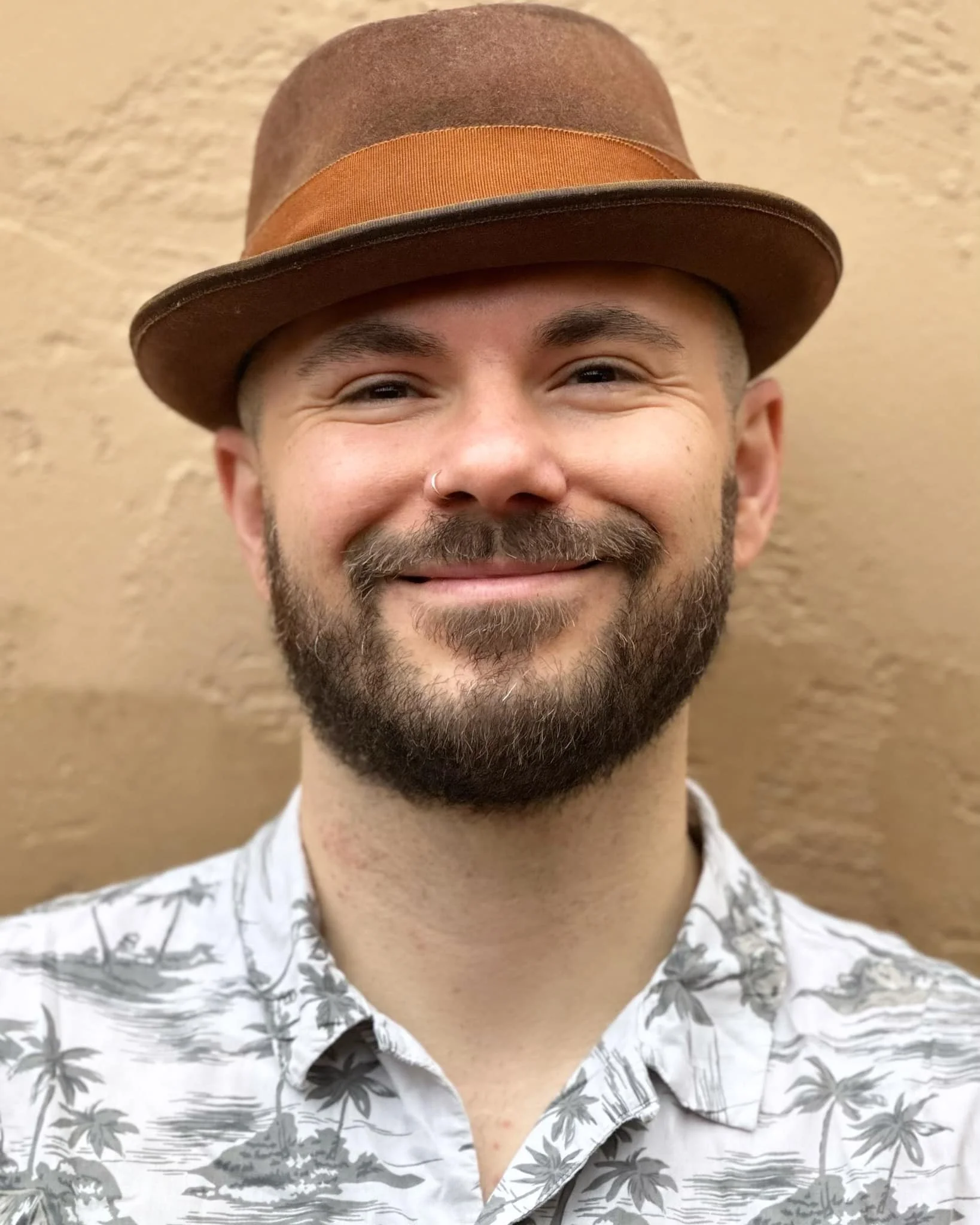
We sat down for an interview with acclaimed book author Nico Lang, who traveled the country uplifting the stories of trans youth and their families.
Conducted by Lambda Legal Strategic Communications Director Samy Nemir
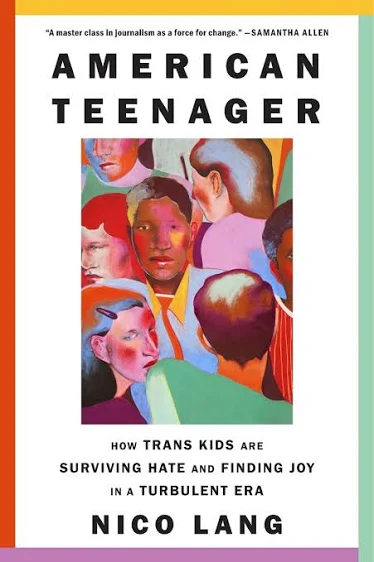
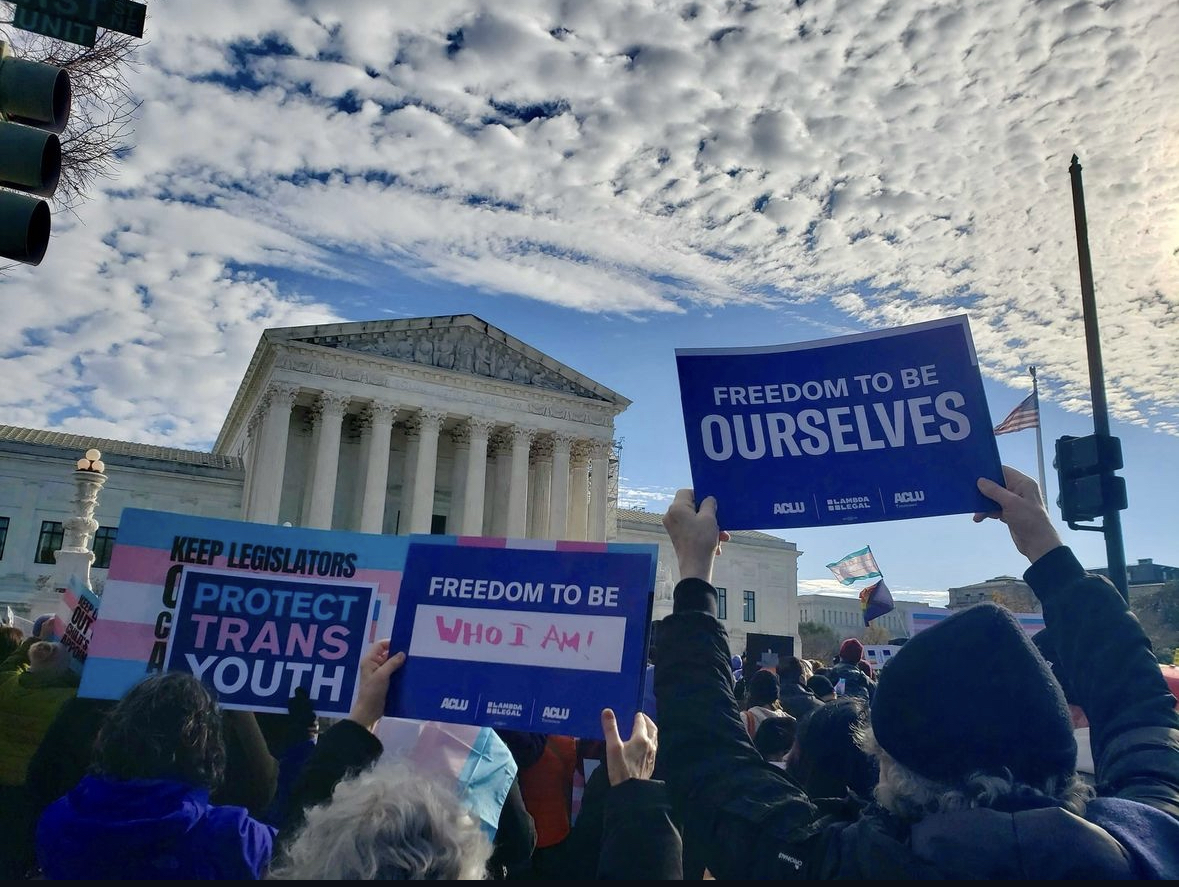
This past January, the Supreme Court heard oral arguments in West Virginia State Board of Education v, B.P.J., the lawsuit Lambda Legal and the ACLU brought to challenge West Virginia’s ban on transgender students participating in school sports. As we await SCOTUS’ decision, we are centering the voices of the most impacted by sharing a Q&A with Nico Lang, author of the book “American Teenager” that follows seven families navigating the harsh realities of raising transgender teens today.
In this Q&A, Nico Lang shares their reflections on what these families want the public to understand about transgender youth, why their everyday experiences matter in a polarized political moment, and what’s at stake as the nation awaits a landmark ruling that could shape the future of trans students across the country.
You have collected powerful stories of seven families across different states, highlighting the voices and experiences of trans youth. What do you want people to learn from these families?
I want people to see not merely that the children depicted in “American Teenager” are kids, just like any other kids, but that they are human beings deserving of the same love and protection as everyone else. This book was written to be an immersive experience, not merely in the daily lives of these young people but also their lived emotional realities. I wanted to depict their inner lives in a holistic and authentic way: their hopes, their dreams, their mundane likes and dislikes, and all the unseen places where they find joy and solace on the darkest of days. It’s a portrait of trans existence during a time of escalating fascism and authoritarianism, but also of resilience. When people finish this book, I hope that they build a better society for these children: where their humanity is affirmed and one in which the act of being themselves isn’t so extraordinarily difficult.
The stories chronicle experiences beyond what we see in the news and politics: families’ trauma but also makes space for laughter, joy, and ordinary teen life. Why is that exploration so important today?
To me, this book is about where the mundane becomes sublime. Rather than getting lost in the big picture or the myopia of data, I thought that being really laser-focused on the everyday things that these families go through would create greater empathy. I say in the book that we often treat trans teenagers — and trans people more broadly — as if they occupy an entirely different world than the rest of us, or they are these sea creatures who were recently discovered at the bottom of the ocean. But through lifting up the minutiae of their daily lives, readers who may not be familiar with trans youth or their stories can see how much we all have in common.
And then for families and kids themselves, I felt that the act of being seen would be equally humanizing. Very often, I read stories about trans youth and the people who love them, and they don’t remind me of anyone I’ve ever met. There’s no life in it, no messiness, no truth. It’s just the surface. But the subjects of this book were allowed a say in their own authenticity. I would ask them: How would you like to be depicted? What story do you want to tell? How do I tell it? It was about making space for all the things they wanted to say but had never been given the opportunity, and they found that liberating: not to be perfect but simply human.
On my book tour, I have said this very often: It’s a lot harder to dehumanize people that are human to you. I think everyone in society benefits when our world is more human, most of all the people having their personhood stripped away from them.
The families in your book navigate very different health-care terrains. Where do you think the policy debates and mainstream media stories miss the mark in the conversation around access to gender-affirming care?
Well, it’s quite simple: They are missing the voices of trans youth whose access to necessary health treatment is being stripped away. Very often, outlets like The Washington Post and The New York Times will cover news impacting the trans community — such as states restricting gender-affirming care to minors — without bothering to speak to a single trans person. The same erasure happens in policy debates, which is depicted in my book. Although trans kids are permitted to speak out against anti-trans bills in committee hearings, state lawmakers won’t listen. They will either be on their phones or laptops, pretending to look up at the ceiling, or simply not present at all. They don’t want to hear the voices of those affected because, otherwise, it might force them to rethink what they are doing and to have empathy for the young people harmed by their decisions.
For me, it’s imperative that we center people, all people, in conversations about their health care. You couldn’t tell an honest and authentic story about reproductive access in the U.S. without uplifting the lives of people seeking abortions or other kinds of medical care that meets their specific needs. And yet that happens too often: The first step to taking away bodily autonomy is taking away our voices. Far-right politicians know that, and they do this intentionally. And when media outlets repeat those same mistakes, it makes them not merely complicit but an active participant.
What’s one story in the book that crystallizes the stakes of timely, medically necessary, and lifesaving care for a teen?
Anyone desiring evidence of how important gender-affirming care is should read Jack’s story in this book, which is documented in the sixth chapter. Jack was one of the young people who lost their access to trans medical care when Gov. Ron DeSantis’ administration blocked minors from getting their transition treatments covered through Medicaid. Jack was 17 at the time, just a few months’ shy of turning 18. Her family didn’t know where else to get her hormones while they waited for her to be a legal adult, so she simply went without. It was, to put it lightly, a horrible time. Jack stopped leaving her room and would sit in the dark all day. She barely ate, and she got so skinny that her mother worried that her heart would stop in her sleep.
Today, Jack is in a good place. She got her gender-affirming care back after that five-month ordeal. She moved out of Florida and is living with her boyfriend. She has a full-time job and things are going well. She survived, but it doesn’t change a simple truth: She was tortured by her own state. This was a 17 year old subjected to incredible suffering through the casual cruelty of her own elected leaders. No person should ever have to go through what she has, let alone a child.
The lesson is simple: Children deserve health care, and to not provide that to them is torture, plain and simple.
Your book narrates school life beyond the classroom, including sports, which is the subject of the Lambda Legal/ACLU case heard by the U.S. Supreme Court in January 2026 — What did you observe and learn about how critical social acceptance is for trans youth?
Personally, I think sports has been over-emphasized somewhat in politics and the media, simply because that is what the far right wanted. They wanted to exploit panic over trans bodies as a justification for a wider retreat on trans rights — stripping away access to bathrooms, affirming documentation, medical treatment, and emergency shelter. By painting trans athletes as villains and cheats, it’s always been about teaching the public to see trans people as the enemy.
But in “American Teenager”, you catch glimpses of how profoundly normal it is for trans youth to participate in sports. After Clint’s top surgery, he joins the men’s swim team at school without incident. It was never even raised as being an issue, whether from the administration or his other teammates. He just got to be one of the guys, which is what he had always wanted. For Clint, I believe it was less about sports than being able to be part of a community and what that community represented to him: being accepted as his most authentic self. I imagine that is true for most kids — that they just want to belong, but on their own terms.

What do you think is the most important lesson from these stories of trans youth and their families for someone who hasn’t read the book yet or fully understands trans identities?
First, people should try to read the book. If you aren’t a reader, there is also an audiobook, read by me. I worked really, really hard on it. If you can’t afford a copy, request it from your local library. Many libraries also allow you to check out audiobooks as well. To me, the most important lesson from “American Teenager” is simply that we need to give young people the agency to determine their own paths in life. That’s all these kids really want: to have the time, the space, and the resources to figure out who they are and how they want to contribute to this world. If people read this book and they want to help these kids thrive because they identify with them and their stories, I think that’s great. The world feels nicer when we see ourselves in others, much less lonely. But if people read this book and these stories don’t resonate with them at all, we should want that for them anyway. We should want people to thrive simply because it is what they deserve. It is what we were all allegedly promised by the American experiment, and yet it has only ever been accessible to a small few. I hope we work harder than ever to change that.
Lambda Legal lifts up the vital stories found in “American Teenager” during World Book Day, Banned Books Week, but also every single day. These stories matter and belong all year long.
Click here to learn more about Lambda Legal’s tireless work protecting the rights of LGBTQ+ youth and students. Purchase a copy of “American Teenager” by heading here.